

BUSINESS HOURS
Mon - Sun: 6am to 6pm
24/7 Emergency Work
Mon - Sun: 6am to 6pm
24/7 Emergency Work
SERVICE AREA
40km around Logan QLD
40km around Logan QLD
Land clearing includes removing unwanted trees, shrubs, stumps, debris and other vegetation, along with preparing the ground for construction, landscaping or other site works. For properties considering tree removal in Logan, knowing what land clearing involves can help set realistic expectations for time, cost, site impact and the level of specialised help required.
Batchelor & Sons Tree Services provides professional land clearing services and tree care solutions to help prepare properties for construction, landscaping, access improvements and other outdoor projects. Professional clearing can involve much more than removing trees and vegetation.
A clear understanding of the land clearing process also highlights important safety considerations, regulatory requirements and ways to protect retained trees, structures and surrounding areas. Careful planning allows the required work to be carried out efficiently while preparing the property for its next stage.
Land clearing often begins with removing trees, shrubs and dense undergrowth to create a safe and workable area for excavation, construction or landscaping. The process can involve more than cutting vegetation at ground level, where larger trees, dense shrubs or extensive root systems are present.
The approach depends on the type and condition of the vegetation, site access, surrounding structures and intended use of the land. Careful removal helps limit unnecessary ground disturbance and reduces the risk of unwanted regrowth.
Before clearing begins, the site is assessed to identify trees and vegetation that need to be removed or retained. Trees are checked for size, lean, structural condition and proximity to buildings, fences, power lines and access routes. Larger or compromised trees may require sectional dismantling using climbing equipment, elevated work platforms and rigging.
Restricted access, nearby structures, powerlines and unstable trees are among the factors that can make difficult tree removals require more specialised planning and equipment.
The density and height of shrubs and undergrowth also influence the equipment required. Skid steers, brush cutters, mulchers and excavators may be used depending on the site. Underground services and any relevant vegetation or habitat restrictions should also be identified before work begins.
Tree removal is carried out according to the available space and surrounding hazards. On open blocks, suitable trees may be felled in a controlled direction, while trees close to structures or services may need to be dismantled in sections.
Appropriate tree work safety measures are particularly important when trees are close to structures, services or other hazards.
After removal, trunks and larger branches can be cut into manageable sections. Suitable timber may be retained for firewood, milling or landscaping, while smaller branches can be processed separately.
Shrubs, hedges, vines and dense regrowth are removed to improve access and visibility across the property. Brush cutters and chainsaws can handle lighter vegetation, while forestry mulchers and slashers may be more suitable for larger areas of thick scrub.
Woody shrubs with extensive root systems may need to be removed using excavators or loaders, where the area will be used for structures, fencing or new planting. Vines and creepers growing around retained trees or structures may also need to be removed to prevent ongoing damage.
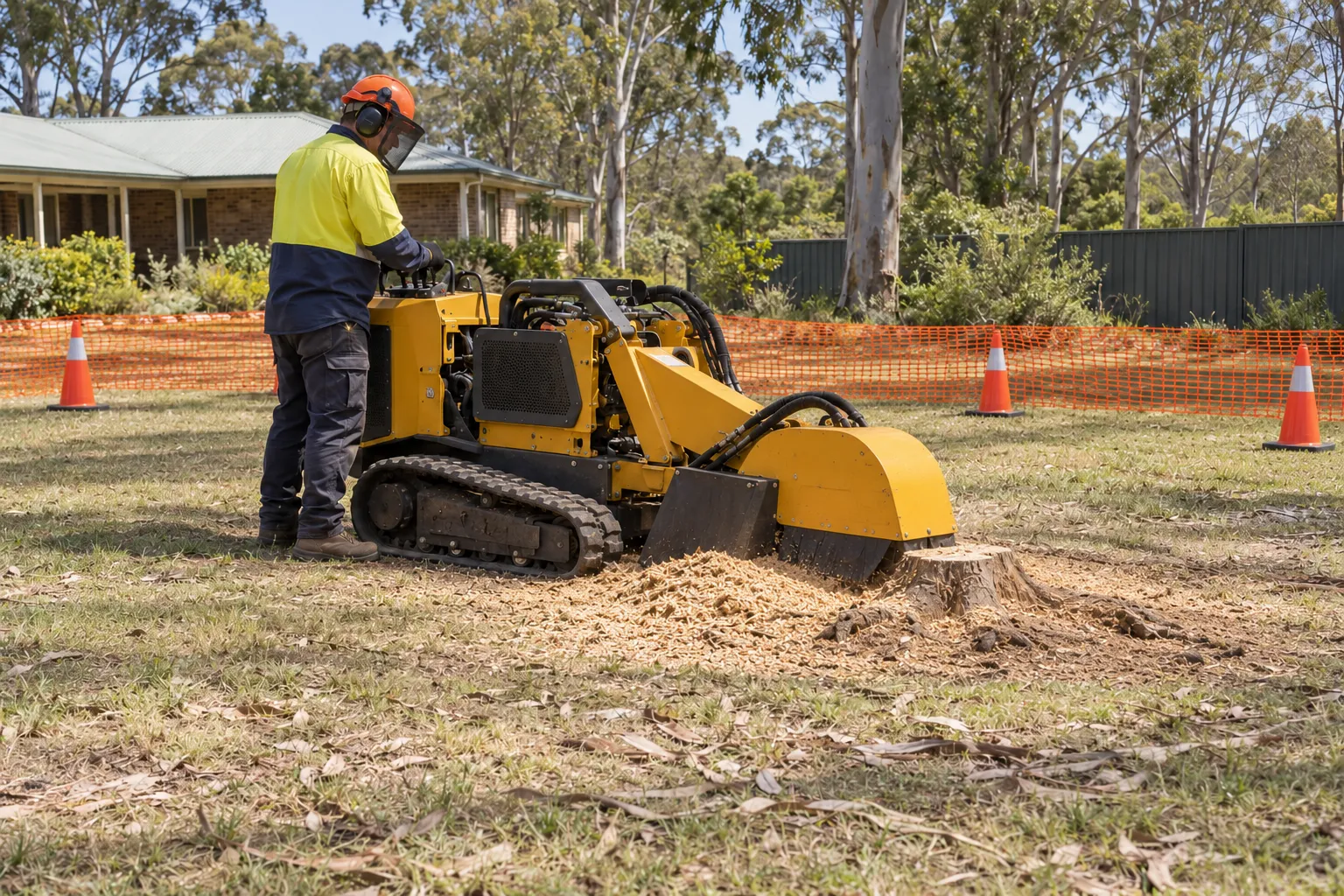
Removing stumps and controlling unwanted regrowth are important parts of thorough land clearing. Leaving stumps and root systems in place can create trip hazards, interfere with future construction and allow new shoots to reclaim cleared areas. Proper removal also leaves the ground easier to grade, landscape or develop.
The right approach depends on the size and location of the stump, site access, soil conditions and how the land will be used afterwards. Some sites may only require grinding, while others may benefit from complete extraction.
Several methods can be used depending on the site and plans:
The required depth of removal depends on what will be built or installed in the area. Construction zones may require more extensive removal than areas being returned to garden or lawn.
Removing the visible stump does not always remove the entire root system. Shallow roots that interfere with grading, drainage or construction can be cut and removed, while deeper roots may remain after grinding and gradually decompose underground.
Understanding what happens to roots after stump grinding can help property owners plan for grading, landscaping or construction after the stump has been removed.
After extraction, the resulting hole should be cleared of loose timber and backfilled with suitable material. Landscaping areas may then be topped with clean soil, while construction areas may require controlled compaction to reduce the risk of settlement.
Some tree and plant species can produce new shoots from remaining roots or freshly cut stumps. Simply cutting the visible growth may therefore provide only a temporary solution.
Depending on the species and site requirements, regrowth may be managed through:
Follow-up inspections can be useful after clearing, along boundaries, fence lines and drainage areas. Early removal of new shoots helps prevent regrowth from becoming established and reduces the need for more extensive clearing later.
Removing fallen timber, branches and green waste is an important part of land clearing. Trees and vegetation can leave behind large amounts of organic material that restrict access, create trip hazards and make it difficult to prepare the ground for construction, landscaping or other work.
The material is cut into manageable sections, sorted and processed before being reused, stockpiled or transported away. The most suitable approach depends on the amount of debris, available site access and the condition of the material.
Fallen trunks and large branches can be heavy and unstable, particularly after storms or controlled tree removal. Larger pieces may be cut into sections and moved using excavators, skid steers or other suitable machinery. Usable timber can be separated for firewood, milling, landscaping features and retaining or edging materials.
Rotten or unsuitable timber may instead be chipped, mulched or transported for disposal. Machinery should be operated around retained trees, structures and sensitive ground to minimise unnecessary soil disturbance.
Branches, leaves and smaller vegetation can quickly build up across a cleared area. Material is commonly collected into manageable piles before being chipped or mulched to reduce its volume.
Depending on the condition and intended use, the resulting mulch can be:
Where chipping is unsuitable, larger quantities of vegetation may be processed with forestry mulching equipment or loaded for off-site removal.
Green waste may include leaves, branches, shrubs and other organic material produced during clearing. Separating clean timber and suitable mulch from contaminated or unsuitable material helps ensure each type is handled appropriately.
Disposal or reuse options may include:
The final clean-up involves removing loose branches, leaves and smaller debris from the cleared area. Access routes, driveways and surrounding areas are also checked so the property is left safe, tidy and ready for grading, construction, landscaping or ongoing use.
Selective clearing removes vegetation that is no longer required while retaining healthy trees and other valuable plants. Rather than clearing an entire property, the process focuses on areas affected by construction, landscaping, access requirements, invasive vegetation or safety concerns.
Retaining established trees can help maintain shade, privacy, visual appeal and habitat across the property. It can also reduce unnecessary ground disturbance, provided the retained trees are suitable for the site and properly protected during clearing.
The site is assessed to determine which trees and vegetation should be removed, pruned or retained. Trees are considered based on their condition, stability, species, location and proximity to buildings, fences, services and access areas.
Removal methods are then selected according to the available space and surrounding conditions. Trees close to structures or retained vegetation may need to be dismantled in sections, while suitable trees in open areas may be felled directionally.
Retained trees need protection throughout the clearing process. Machinery, excavation and stockpiled materials can damage roots and compact surrounding soil, affecting tree health over time.
Common protection measures include:
The final site layout can also be planned around important established trees. Building areas, driveways, service routes and outdoor spaces may be adjusted where practical to retain suitable trees while maintaining safe access and meeting the requirements of the proposed project.
Land clearing can prepare a property for construction by removing vegetation, trees, stumps and other obstacles that could interfere with building work. The level of preparation depends on the proposed development, with residential projects often requiring a clear building footprint and access areas, while larger developments may require broader clearing for roads, services, foundations and work zones.
The process involves several stages:
Land clearing does not necessarily involve removing every tree or piece of vegetation from a property. A well-planned approach creates the required space while retaining suitable vegetation and limiting unnecessary disturbance to the surrounding site.
Land clearing may also involve removing rocks, rubbish, old building materials and other obstacles that make a property difficult to access or prepare. These materials can interfere with machinery, excavation, drainage, fencing and construction on neglected or previously developed blocks.
The type of obstruction determines how it is handled. Common materials found during clearing can include:
Smaller rocks and loose debris can often be collected using suitable machinery, while large or embedded rocks may require excavators or specialised equipment. Heavy materials such as concrete and masonry may also need machinery for safe loading and removal.
Some obstructions only become visible after vegetation and topsoil have been cleared. Buried timber, old footings, pipes or abandoned structures may require additional excavation or specialist assessment before they can be removed.
Care is needed around retained trees, underground services and existing structures to avoid unnecessary damage or ground disturbance. Hazardous or contaminated materials should also be identified and handled separately rather than being treated as ordinary green waste.
Once the main obstructions have been removed, the cleared area is checked for remaining hazards like sharp materials, loose rubble, protruding objects and debris hidden beneath vegetation. Suitable materials can be separated for reuse, recycling or disposal.
A thorough clean-up leaves the required areas accessible for grading, excavation, fencing, landscaping or construction while reducing potential hazards for machinery and workers. It also provides a cleaner starting point for the next stage of site preparation.
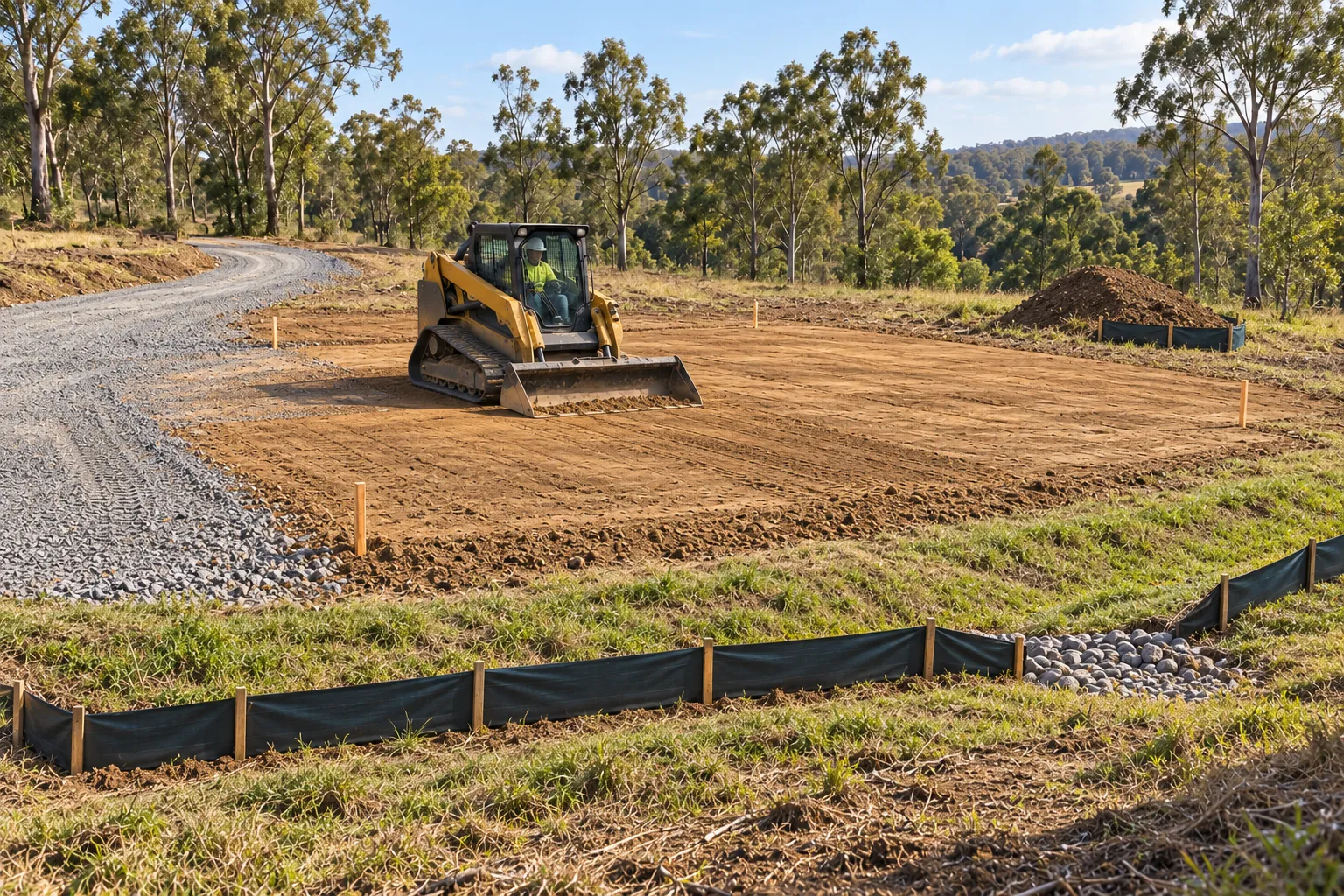
After vegetation, stumps, rocks and other obstructions have been removed, grading and levelling can prepare the ground for construction, landscaping, fencing or other site works. The process reshapes uneven areas, establishes suitable levels and helps manage how surface water moves across the property.
The amount of earthmoving required depends on the existing terrain, soil conditions and intended use of the site. A relatively flat block may only need minor adjustments, while sloping or uneven land may require more extensive cutting, filling and compaction.
High areas can be cut down and suitable material can be used to fill low sections. Excavators, skid steers, graders and other machinery may be used depending on the size and condition of the property.
The finished levels should suit the intended use of each area. A building pad, driveway, lawn and drainage area may each require different levels or falls, rather than the entire property simply being made flat. Proper grading can also help direct surface water towards suitable drainage points and away from structures.
Grading can expose softer soil, buried roots or areas affected by previous vegetation growth. Suitable fill may need to be compacted to reduce settlement, particularly where construction or paved surfaces are planned.
Topsoil can also be separated and retained where it is suitable for later landscaping. Once the ground has been shaped, compacted where required and cleared of remaining obstructions, the site can be prepared for the next stage of construction, landscaping or other planned works.
Land clearing can generate substantial amounts of soil, timber, branches, mulch, roots, rocks and other material. Managing these materials properly helps keep the site organised and prevents reusable resources from becoming mixed with general waste.
Where practical, suitable materials can be reused on the property. Other materials may need to be stockpiled, recycled or transported to an appropriate facility, depending on their condition and the requirements of the project.
Materials are separated according to their potential use or disposal requirements. This can include:
Keeping different materials separate makes handling more efficient and reduces the risk of suitable soil or organic material becoming contaminated with general waste.
Temporary stockpiles should be placed where they will not obstruct access, drainage, retained trees or construction areas. Topsoil and other reusable materials also need to be protected from unnecessary machinery traffic and contamination.
Once grading and other site works are complete, reusable materials can be redistributed as required. Excess soil, unsuitable timber, rocks and other waste can then be loaded and transported to appropriate facilities or locations, leaving the property organised and ready for its next stage.
Land clearing can include removing weeds and invasive vegetation that may quickly return after the main clearing work is complete. Dense groundcovers, climbing plants, suckers and species that spread through seeds or underground roots may require more than simply cutting the visible growth.
The control method depends on the type of vegetation and condition of the site. Mechanical removal using brush cutters, slashers, mulchers or excavators may be suitable for larger areas, while established root systems may require deeper removal, repeated cutting or targeted treatment where appropriate.
Follow-up monitoring can also help identify new growth before it becomes established. Extra care may be required near retained trees, gardens, waterways and neighbouring properties to prevent plant material or treatment from spreading beyond the area being cleared.
Several factors can influence how land clearing is planned and carried out. The size and condition of the property, vegetation type, site access, terrain and intended use all affect the equipment, techniques and amount of work required.
Consider the following:
Assessing these factors before work begins helps establish the appropriate clearing methods, equipment and site management requirements. It can also reduce unnecessary disturbance and help identify potential access, environmental or regulatory issues before clearing starts.
Land clearing involves much more than removing trees and overgrown vegetation. It can include stump and root removal, debris management, selective clearing, grading and site preparation, with each stage helping create a safer and more practical property for its intended use. Careful clearing can also help protect retained trees, surrounding structures, soil and drainage while reducing unnecessary disturbance to the site.
Batchelor & Sons Tree Services provides the equipment, experience and practical knowledge needed to manage different land clearing requirements. From vegetation and stump removal to final site clean-up, a well-planned approach can help prepare the property for construction, landscaping, access improvements or other future works.