

BUSINESS HOURS
Mon - Sun: 6am to 6pm
24/7 Emergency Work
Mon - Sun: 6am to 6pm
24/7 Emergency Work
SERVICE AREA
40km around Logan QLD
40km around Logan QLD
After a tree has been removed, many property owners assume the job is finished once the stump disappears. However, what remains below ground can still affect future landscaping, replanting and long-term site conditions. For homeowners considering stump removal in Logan, understanding what happens to the root system after stump grinding can help avoid surprises and make the area easier to reuse.
Whether the goal is to lay new turf, install paving or plant another tree, the remaining roots can continue to affect the surface as they slowly break down. At Batchelor & Sons Tree Services, we understand that knowing how roots decay, whether regrowth is possible and when additional root removal may be needed helps property owners plan the next stage with confidence.
Before removing a tree or carrying out major work, property owners should also check Logan City Council’s guidance on vegetation protection, as some trees or vegetation may be protected depending on the property and location.
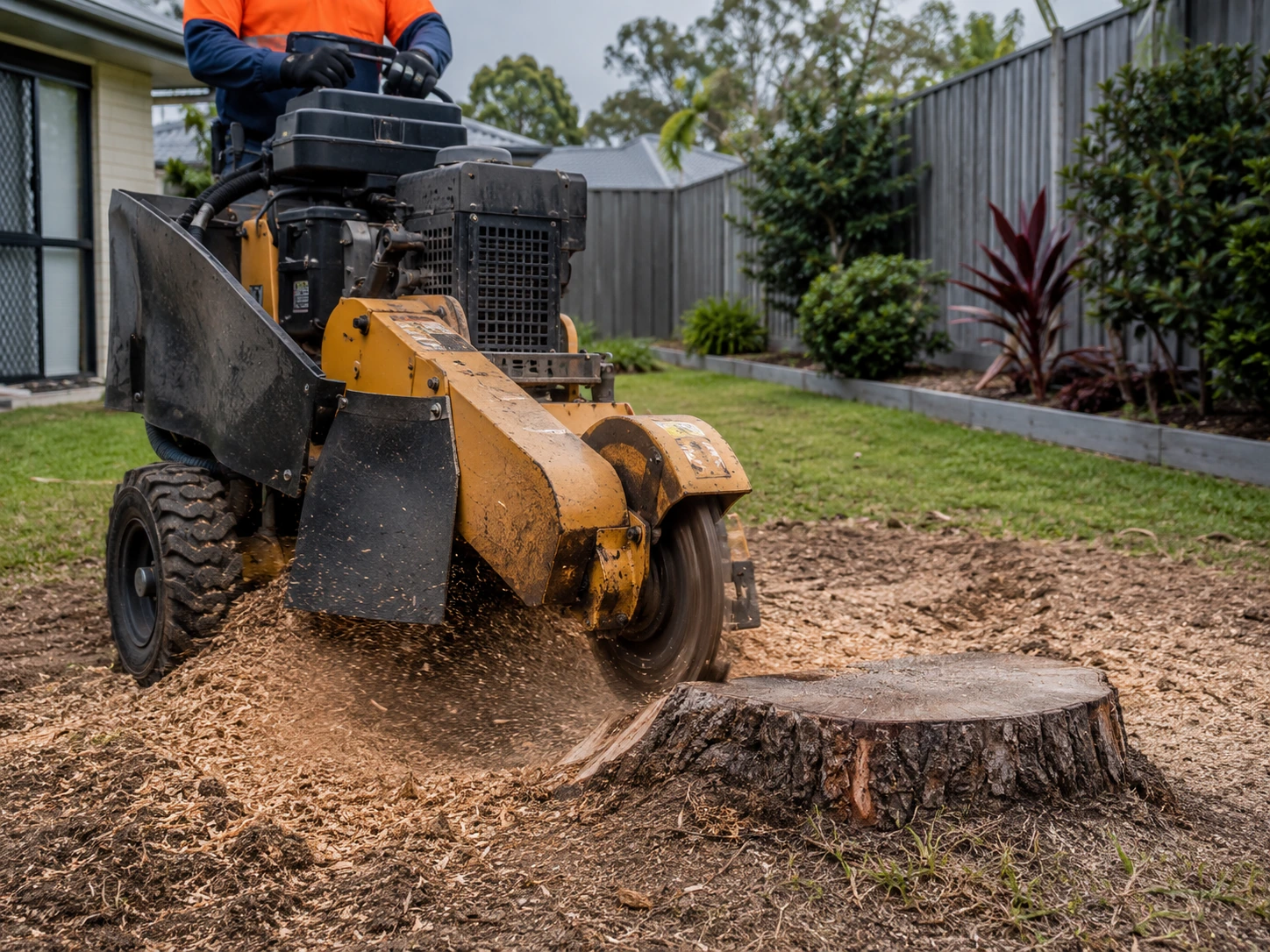
Stump grinding focuses on the visible stump and the main root flare at or just below ground level. The wider root system that spreads through the soil is not fully removed during a standard stump grinding service and usually does not need to be.
Understanding what is and is not removed helps set realistic expectations. It also guides decisions about replanting, landscaping, surface levelling and preventing possible regrowth after a tree has been removed.
Stump grinders are designed to chip away the central stump and the upper sections of the main roots. The machine is operated over the stump in passes until the wood is ground down to a set depth.
In typical domestic work, the stump is often ground to a depth of around 150 to 300 mm below the soil surface, depending on the site, access, stump size and intended use of the area. The grinding area usually extends slightly beyond the visible stump and root flare. At this depth, the thick upper roots connected directly to the stump are usually severed and reduced to wood chips.
However, the wider root system remains in the ground. These roots may extend several metres from the original trunk, particularly where the tree was mature or had a broad canopy. Standard stump grinding is not a full excavation service. It does not involve digging out every root with an excavator or hand tools, and it is not intended to remove the entire root network.
After grinding, the remaining roots are dead or in the process of dying. Without the trunk and canopy, the tree no longer has the same ability to produce and store energy. Over time, the roots gradually break down in the soil.
In many garden beds, this slow decay can benefit the soil by adding organic matter and leaving small channels for air and water. However, larger roots may also contribute to minor sinking as they decompose, especially in lawns or areas where the ground needs to stay level. Small dips can usually be managed by topping up the area with soil, lawn dressing or mulch as needed.
Complete root removal is rarely necessary, but some situations call for more work than standard stump grinding provides. Additional root removal may be recommended if:
In these cases, options may include targeted excavation of problem roots, deeper grinding in a wider radius or removing large roots from a specific construction or planting zone. The right approach depends on access, soil conditions, root size, nearby structures and how the area will be used after the tree is gone.
After stump grinding, most remaining roots do not keep growing in the same way they did when the tree was alive. Once the trunk and canopy are removed, the root system loses its main source of energy. Larger structural roots usually stop extending and slowly die back.
However, some species can still produce new shoots from remaining roots or from a small section of stump if it has not been fully ground out. This is why regrowth depends on the tree species, the condition of the stump and how much living tissue remains below the surface.
Once a stump is ground, the bulk of the trunk and the main growing point are removed. Without leaves to photosynthesise, the tree cannot continue producing new energy. Larger roots gradually become inactive and begin to decay.
Fine feeder roots are usually the first to die and break down. These delicate roots sit closer to the surface and are more affected by the stress of removal and the grinding process. Thick woody roots can remain intact for several years, but they are usually no longer actively growing.
As decomposition progresses, the root mass slowly shrinks. This can cause minor settling in the ground over time, particularly around the original stump location and along large surface roots.
Some trees are more likely to reshoot after cutting or grinding. This is usually seen in vigorous or suckering species, including:
New shoots may appear around the old stump area or further along the remaining root system. Cutting these shoots off at ground level as soon as they appear can gradually exhaust the remaining root reserves. In some situations, targeted treatment may be needed to manage persistent regrowth. Any chemical use should always follow label directions and local requirements.
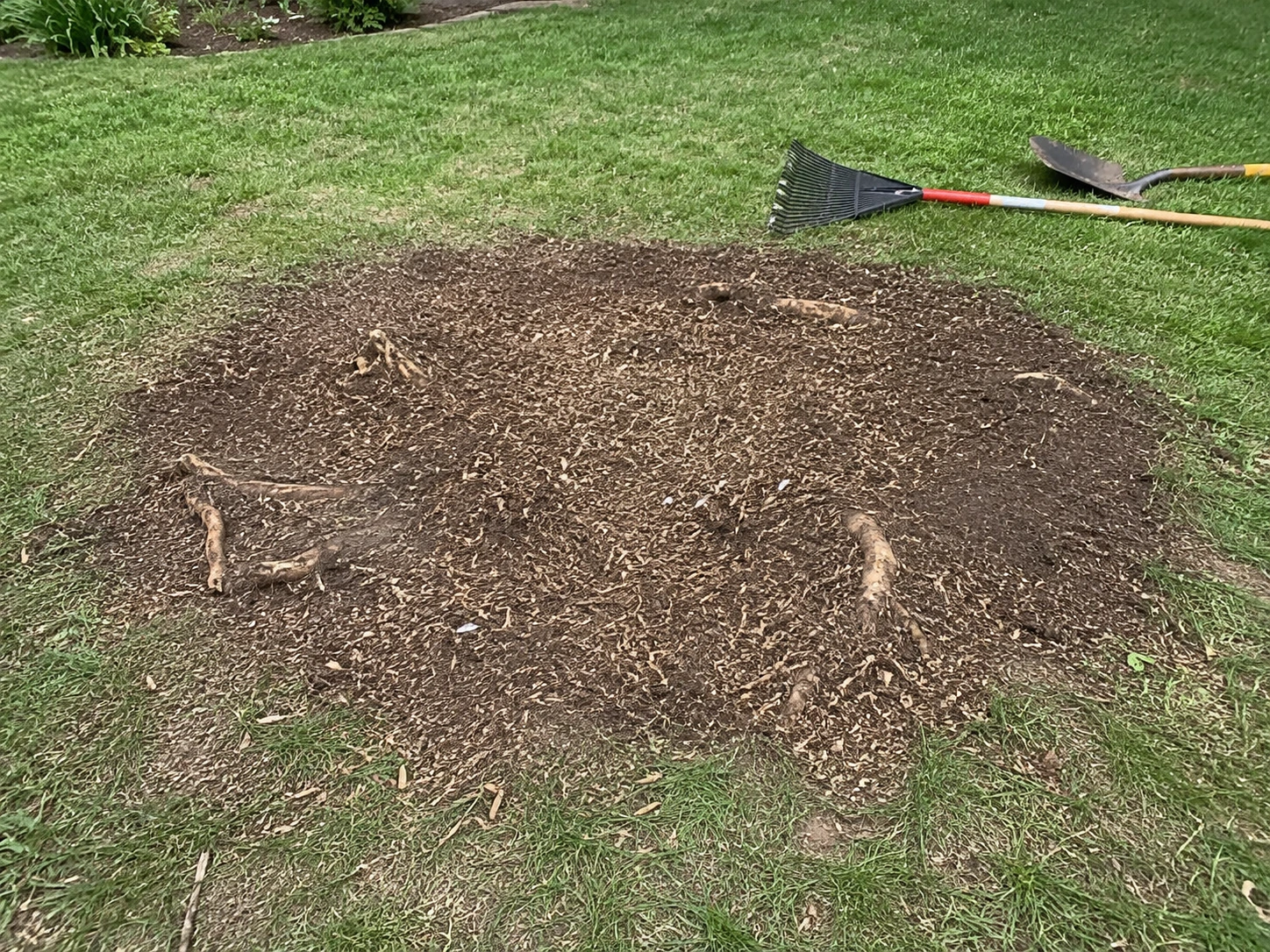
Tree roots do not disappear immediately after stump grinding. Smaller roots may soften and decay within a few years, while larger structural roots can remain in the soil for much longer. The timeframe depends on the tree species, soil type, moisture levels, temperature and the size of the remaining roots.
For most domestic gardens, the presence of old roots is not a major problem. The more important question is whether the area will be used for lawn, planting, paving, construction or another purpose where stability and soil preparation matter.
Fine feeder roots and smaller lateral roots often break down within 1 to 3 years. These are the fibrous roots commonly found in the upper soil layer, and they decay relatively quickly once the tree is dead.
Larger structural roots take longer. Main roots with a diameter of 5 to 15 cm may take 5 to 10 years to fully decompose in average conditions. Very large roots or buttress roots from mature trees can remain recognisable for a decade or more, although they gradually lose strength and mass.
Hardwood species generally decay more slowly than softer wooded trees. Dense roots in dry, well-drained soil can persist for a long time, while softer roots in moist, active soil may break down more quickly.
Root breakdown is a natural biological process carried out by fungi, bacteria and soil organisms. Conditions that support these organisms usually help speed up decay.
Decomposition is generally faster when the soil is moist but not waterlogged, the topsoil is healthy and active, and organic matter is present. Very dry, compacted or poorly aerated soil can slow the process.
Wood chips from stump grinding can also affect the area. A light layer of chips may help retain moisture and support soil life. However, a thick layer of fresh grindings mixed through the topsoil can temporarily tie up nitrogen, which may affect nearby plants or new turf. For this reason, it is often best to remove excess grindings from the planting or turfing area and replace them with quality topsoil.
In many cases, remaining roots break down without causing serious issues. However, problems can occur when old roots affect the surface, interfere with new planting, sit close to hard landscaping or have already entered damaged drains.
Most issues are manageable with the right preparation. The key is understanding whether the area only needs light levelling or whether extra root work is required before replanting, paving or building.
The most common concern is whether the tree will grow back. Once the stump is ground below the surface, strong regrowth is less likely, but some species can still send up shoots from remaining roots.
If suckers appear, they should be dealt with early. Repeated cutting can weaken the remaining root system over time. If shoots are left to grow, they may develop into dense clusters or small multi-stemmed trees, which can become harder to manage.
As old roots decompose, they leave small voids in the soil. On lawns and garden beds, this can lead to slight sinking, soft spots or uneven patches over several years. These areas may hold water after rain or make mowing less even.
Minor sinking can usually be corrected by adding soil or lawn dressing as the surface settles. Larger depressions are more likely where a large tree was removed or where major roots were close to the surface.
Large woody roots can make it harder for new plants to establish directly over the old stump location. The soil may contain leftover wood, air pockets and fewer fine soil particles. This can restrict new root growth and affect moisture and nutrient availability.
Planting a new tree directly in the same spot is often less successful than offsetting it from the old stump. Where space allows, planting at least 1 to 2 metres away gives the new tree a better chance to establish in cleaner, more workable soil.
Existing roots near patios, driveways or foundations do not continue expanding once the tree is dead. However, large roots can remain as hard obstructions for years and may be found during future excavation or landscaping.
Where roots, branches or tree-related damage affect a neighbouring property, Queensland property owners should understand their responsibilities as a tree keeper before taking action.
Where roots have already lifted paving, damaged walls or entered cracked drainage pipes, stump grinding alone may not solve the problem. Drain damage, retaining wall movement or paving displacement should be inspected and repaired separately if required. If roots have entered old or broken pipes, the pipe defect still needs to be addressed, even after the tree has been removed.
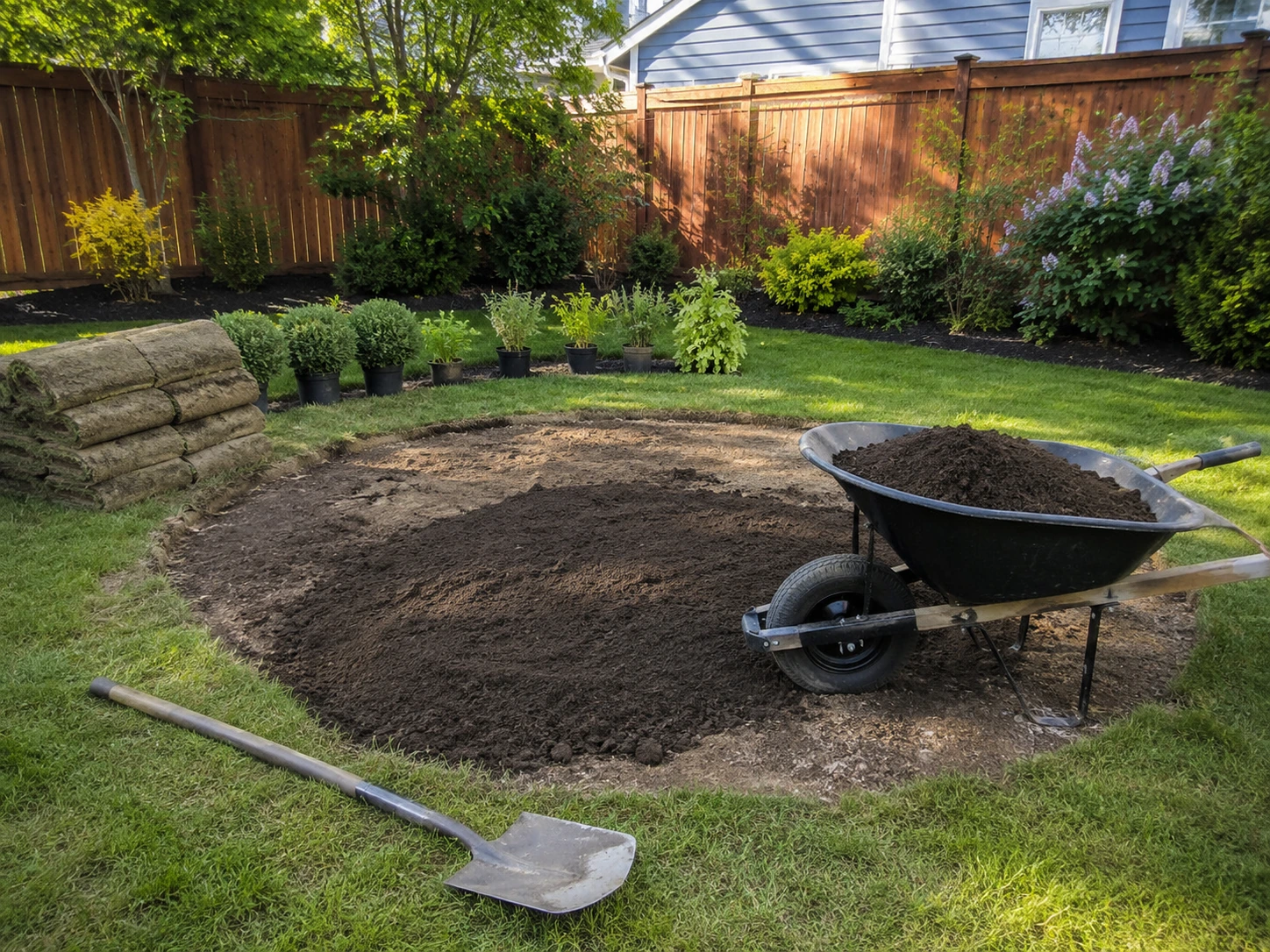
It is possible to replant or landscape after stump grinding, but preparation matters. The ground will usually contain some decaying roots and residual wood chips, which can affect soil stability, moisture and nutrients.
The best approach depends on how the area will be used. Turf, garden beds and light landscaping can often be completed relatively soon after grinding. Hard surfaces and replacement trees need more careful preparation because they are more affected by settling and buried root material.
Shallow-rooted plants are usually the easiest option after stump grinding. Before planting, remove excess grindings from the top 10 to 15 cm of soil. Fresh wood chips are low in nutrients and can temporarily draw nitrogen from the soil as they break down.
Replace the removed material with quality topsoil and level it to match the surrounding ground. For lawns, lightly compact the area and allow it to settle before laying turf or sowing seed. If the surface drops later, top it up with lawn dressing.
Perennials, small shrubs and garden beds can usually be planted around or slightly away from the original stump location. Regular watering and a balanced slow-release fertiliser can help new plants establish while the remaining wood continues to decay below the surface.
Planting another tree in the exact location of a removed tree is more challenging. Large roots and leftover stump material can limit the planting hole, restrict new root growth and create uneven settling as the old material breaks down.
Where possible, plant the replacement tree at least 1 to 2 metres away from the centre of the old stump. If the new tree must be planted in the same location, the area may need more preparation. This can include:
This gives the new tree a better chance of establishing in stable, workable soil.
The former stump area can be used for landscaping, but settlement risk needs to be managed. As roots and buried wood decay, the ground can slowly drop, especially where a large stump has been removed.
Before installing paving, paths or other hard surfaces, remove loose grindings and backfill the area properly. Compacting the fill in layers can reduce future sinking. Where major roots are within the construction footprint, they may need to be excavated before the base is prepared.
For raised beds, rockeries, mulch areas or decorative gravel, minor settlement is usually easier to manage. These finishes can often be installed sooner, with occasional topping up if the surface level drops over time.
Most properties do not need full root removal after stump grinding. Leaving roots to decay naturally is suitable for many lawns, garden beds and general landscape areas. However, additional root removal may be necessary when roots interfere with future use of the space or create ongoing surface problems.
The decision usually depends on the tree species, the size of the root system, how close roots are to structures and what the property owner wants to do with the area next.
More extensive root removal may be useful when the area needs a clean, workable soil profile. This is especially relevant if:
The goal is not to remove every fine root. Instead, the focus is on clearing the main roots from the immediate planting or turfing zone so new roots can establish properly and the surface can be levelled more easily.
Extra root work may also be needed when roots continue to cause visible problems after grinding. This can include repeated suckering, surface roots creating trip hazards or uneven sinking along old root lines.
In these situations, deeper grinding, targeted root excavation or professional regrowth treatment may be recommended. The best option depends on the species, the extent of the issue and whether the area will remain landscaped or be prepared for construction.
Root removal becomes more important when the former tree area will support a hard surface or structure. Patios, driveways, paths, retaining walls and building work require a stable base. Large decaying roots beneath these areas can create future settlement.
Before construction begins, the affected area should be assessed and prepared properly. This may involve removing major roots from the construction footprint, replacing organic material with compactable fill and ensuring the finished surface has a stable foundation.
What happens to tree roots after stump grinding is usually gradual and manageable. While the visible stump is removed, most of the wider root system remains underground and slowly breaks down over time. In many cases, this causes no major issue, especially where the area will be used for lawn, garden beds or light landscaping.
Problems are more likely when roots are close to hard surfaces, services, structures or new planting areas. With the right preparation, most sites can be levelled, replanted or landscaped successfully after grinding. Understanding how roots behave after stump removal helps property owners make practical decisions about reusing the space and deciding whether any extra root work is needed.