

BUSINESS HOURS
Mon - Sun: 6am to 6pm
24/7 Emergency Work
Mon - Sun: 6am to 6pm
24/7 Emergency Work
SERVICE AREA
40km around Logan QLD
40km around Logan QLD
A palm besides the entrance can look attractive while creating a frustrating mess underfoot. If fruit keeps falling across your path despite regular sweeping, targeted pruning may help reduce the problem without unnecessarily damaging the tree. For Logan homeowners, Batchelor & Sons Tree Services assesses the palm and determines whether removing flower or fruit clusters is a suitable option.
The right approach depends on the palm species, the stage of fruit development and how safely the clusters can be reached. Knowing what is falling, when it happens and where it lands helps identify the most practical solution. It also makes it easier to compare recommendations based on the source of the mess rather than simply how much foliage someone proposes to remove.
Fruit drop is usually part of a palm's reproductive cycle rather than a sign that its leaves need pruning. Depending on the species, flowers develop into fruit following pollination, and mature fruit eventually detaches and falls.
Establish what is causing the mess before arranging maintenance. Small fruits scattered across an entrance require a different assessment from a dead frond hanging above the same walkway.
Different palm species produce different flowers and fruits. Some develop prominent branching clusters, while others have reproductive structures that are less visible from the ground. Fruit can be small and seed-like or fleshy, becoming messy when crushed underfoot.
There is no single pruning month that suits every palm. Species, local conditions and the stage of development all influence when cluster removal may be effective. Removing suitable flower clusters before fruit develops can reduce a future crop, while removing mature clusters may help manage fruit that has not yet fallen.
Clear photographs taken safely from ground level can help a tree professional identify the palm and assess the problem. Include the entire tree, any visible flower or fruit clusters and the affected section of the path. Avoid standing beneath hanging material to take a closer photograph.
You can also record when fruit first appears, how long the drop continues and whether several nearby palms could be contributing. These details help distinguish an occasional seasonal problem from a recurring maintenance issue. What homeowners describe as palm seed pods may actually be flower structures or fruit-bearing clusters, so photographs can be more useful than terminology alone.
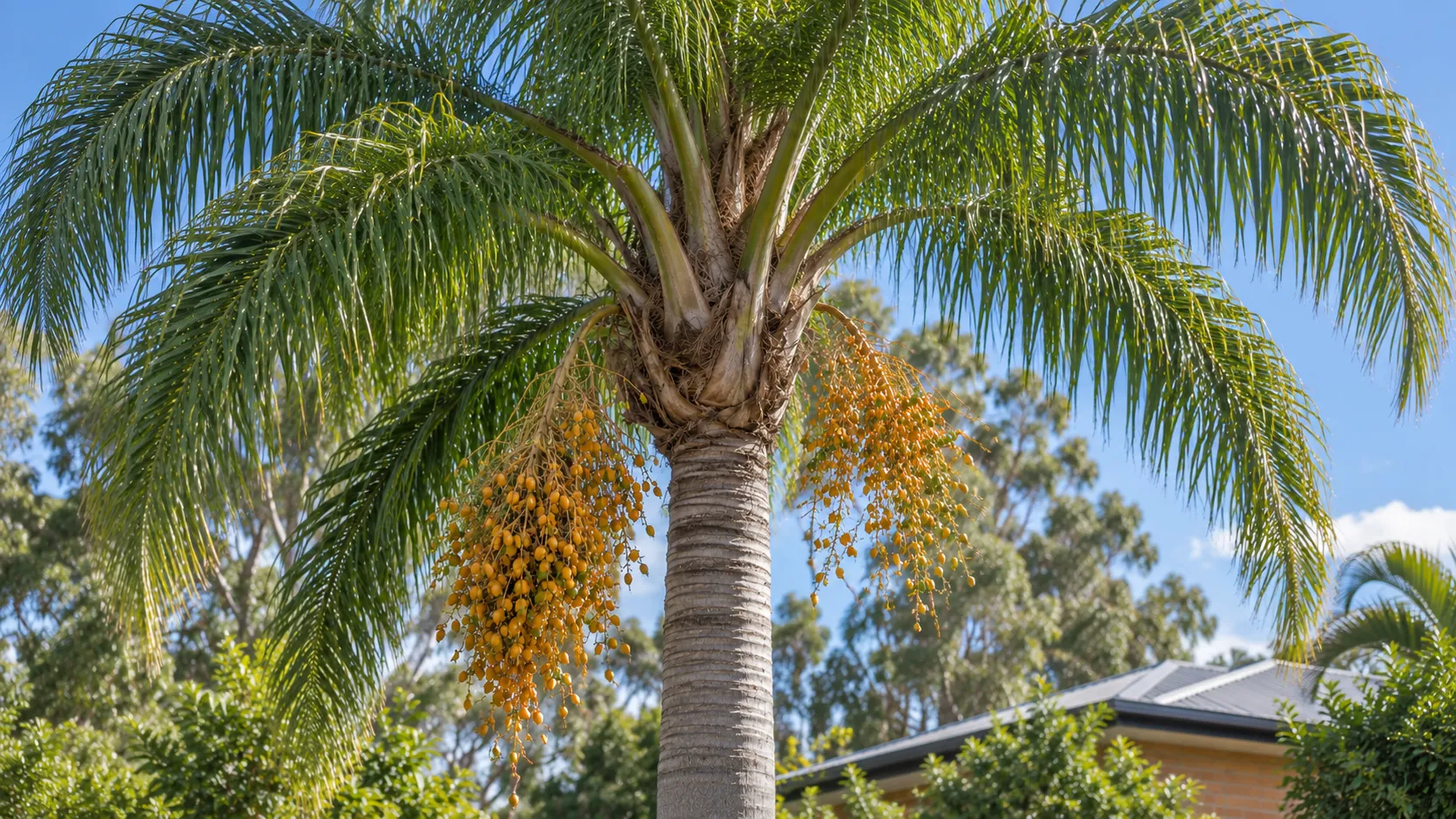
A frond is a palm leaf, while a fruit cluster is a reproductive structure carrying developing or mature fruit. Although both may hang beneath the crown, removing a dead frond does not necessarily address the source of the fruit falling onto your entrance.
This distinction matters when requesting a quote. A general palm tidy-up may focus on dead or damaged foliage without removing the clusters responsible for the mess. Targeted palm fruit removal, on the other hand, may leave other maintenance needs unaddressed.
Explain which area needs protecting, whether it is the front entrance, a gate or a frequently used walkway and how much fruit typically accumulates there. A suitable recommendation should identify the material responsible for the problem and specify what needs to be removed.
Removing suitable flower or fruit clusters can reduce the amount of fruit reaching the ground, but the outcome depends on timing and the palm's growth habits. The goal is to manage the source of the mess without unnecessary damage to the tree.
Targeted pruning cannot guarantee a permanently clean path. New flowers may develop in later growth cycles, and neighbouring palms may contribute to the same problem.
Where appropriate, a tree professional may recommend removing flower clusters before they develop into fruit. This approach targets the reproductive structures rather than the healthy leaves that support the palm's growth.
Its suitability depends on the species, the position of the clusters and whether they can be reached safely. Some may be concealed among the fronds or positioned where access is difficult. An assessment should explain which clusters can be removed and whether the timing is likely to reduce the next round of fruit drop.
When discussing the proposed work, clarify whether the palm currently has flowers, immature fruit or mature fruit. Each stage presents different opportunities for management, so the scope of work should reflect what is actually present.
Once fruit is ripe, some may detach before the scheduled appointment or during pruning. Removing the remaining cluster cannot recover fruit already on the ground, and loose fruit may still be present elsewhere in the crown.
If the palm is already dropping heavily, professional intervention may reduce the remaining mess, but it should not be presented as a way to prevent the entire current crop from falling.
Pay attention to fruit landing on frequently used paths. Soft or crushed fruit can make some surfaces slippery, while loose fruit can interfere with footing. Until the palm has been assessed, keep people away from areas beneath visibly loose material and avoid attempting overhead removal yourself.
Removing a current cluster does not prevent a healthy palm from flowering again. Depending on the species and its growth pattern, managing fruit drop may require periodic assessment rather than a single visit.
When comparing tree loppers in Logan, ask how the proposed work relates to the palm's current flowering stage and the area you want to protect. Confirm whether the quote includes collecting and removing the cut material, clearing the affected walkway and any additional work required.
The guidance on when to prune or remove a tree can distinguish routine maintenance from situations that may need a broader assessment. For recurring fruit drop, however, the main consideration is whether targeted cluster removal suits the particular palm.
Working around a palm crown involves more than identifying a fruit cluster. Tree height, falling material, access conditions and the position of the growing point all affect how the work can be completed safely.
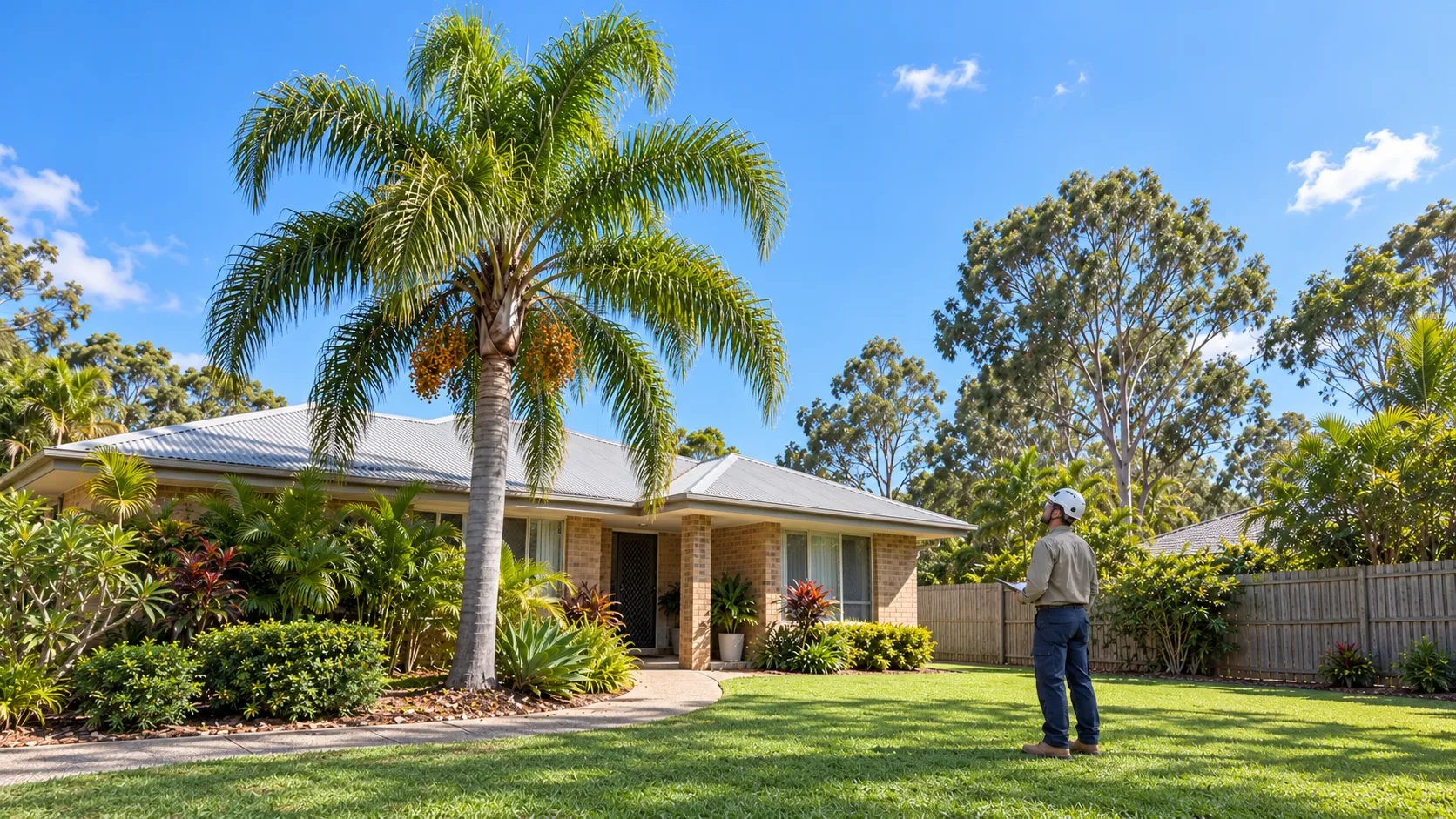
Homeowners can help by describing the problem and identifying the affected area from ground level. Decisions about access, cutting and protecting the crown should be left to a tree professional.
Before arranging work, check Logan City Council’s vegetation protection requirements to determine whether any restrictions affect the proposed work.
Healthy green fronds help a palm produce the energy needed for growth. Removing large amounts of healthy foliage to make the crown look cleaner does not reliably prevent fruit production and can place unnecessary stress on the tree.
The growing point is equally important. Many commonly planted palms have a single growing point at the top of each stem, and serious damage to it can kill that stem. Cutting into the crown or attempting to shorten a palm like a branching tree is not an appropriate way to manage fruit drop.
Ask the person assessing the palm to identify the flower or fruit clusters proposed for removal and explain which healthy fronds will remain. If substantial green foliage removal is recommended, ask why it is necessary and how it relates to the palm's condition.
Suitable pruning should focus on identified material while avoiding unnecessary interference with healthy growth. For a fruit-covered entrance, targeted work may be more appropriate than a broad request to cut the palm back.
Fruit clusters can be heavier and more awkward to handle than they appear from the ground. When detached, they may fall onto people, damage nearby property or scatter fruit across the access area. Working overhead also makes it difficult to judge how clusters are attached and how surrounding fronds may respond when material is cut.
Safe Work Australia’s guidance on tree work safety explains how professionals should manage risks associated with pruning and working at height.
Do not climb the palm; use a ladder to reach clusters or attempt overhead cutting from the path. Even apparently accessible material needs to be assessed in the context of falling debris, nearby structures and people using the area.
When contacting experts, describe where the fruit lands, how frequently it falls and whether flower or fruit clusters are currently visible. Ground-level photographs and a description of access can help establish what needs inspecting, although an on-site assessment may still be necessary.
The advice on what homeowners need to know before tree removal work also provides useful background on access and site preparation. For palm fruit management, ask how the walkway will be managed during the work, which material will be removed and whether debris collection and clean-up are included in the quote.
Palm fruit falling across an entrance can be frustrating, but removing healthy fronds is unlikely to solve the underlying problem. Identifying the palm, assessing its flowering stage and selectively removing suitable clusters can help reduce the mess while protecting the tree's healthy growth. The amount of improvement will depend on the species, timing and whether further flowering occurs.
Batchelor & Sons Tree Services can analyse the palm, explain the available maintenance options and help determine whether targeted pruning is appropriate. A clear assessment and a well-defined scope of work make it easier to manage recurring fruit drop without unnecessary cutting or unrealistic expectations.