

BUSINESS HOURS
Mon - Sun: 6am to 6pm
24/7 Emergency Work
Mon - Sun: 6am to 6pm
24/7 Emergency Work
SERVICE AREA
40km around Logan QLD
40km around Logan QLD
Tree crown reduction is a specialised pruning technique that carefully reduces a tree’s height and spread while maintaining its natural shape and health. For those considering tree lopping in Logan, understanding when crown reduction is appropriate can help them choose a safer and more suitable alternative to excessive cutting or unnecessary removal.
The right level of reduction depends on factors such as the tree’s species, condition, structure and surroundings. When carried out correctly, crown reduction can improve clearance, reduce the weight and leverage of large branches, manage certain safety risks and help maintain a stable, healthy tree.
Batchelor & Sons Tree Services can assess the individual tree and determine whether crown reduction is appropriate or whether another pruning method would provide a better result. Understanding how crown reduction works, when it is recommended and how it differs from other pruning methods can help property owners make decisions about tree care.
Crown reduction is a precise pruning technique that reduces a tree’s overall height and spread while preserving its natural shape and structure. Instead of cutting branches at arbitrary points, an arborist shortens selected limbs back to suitable lateral branches. This reduces excess weight and leverage while allowing the tree to retain a balanced framework.
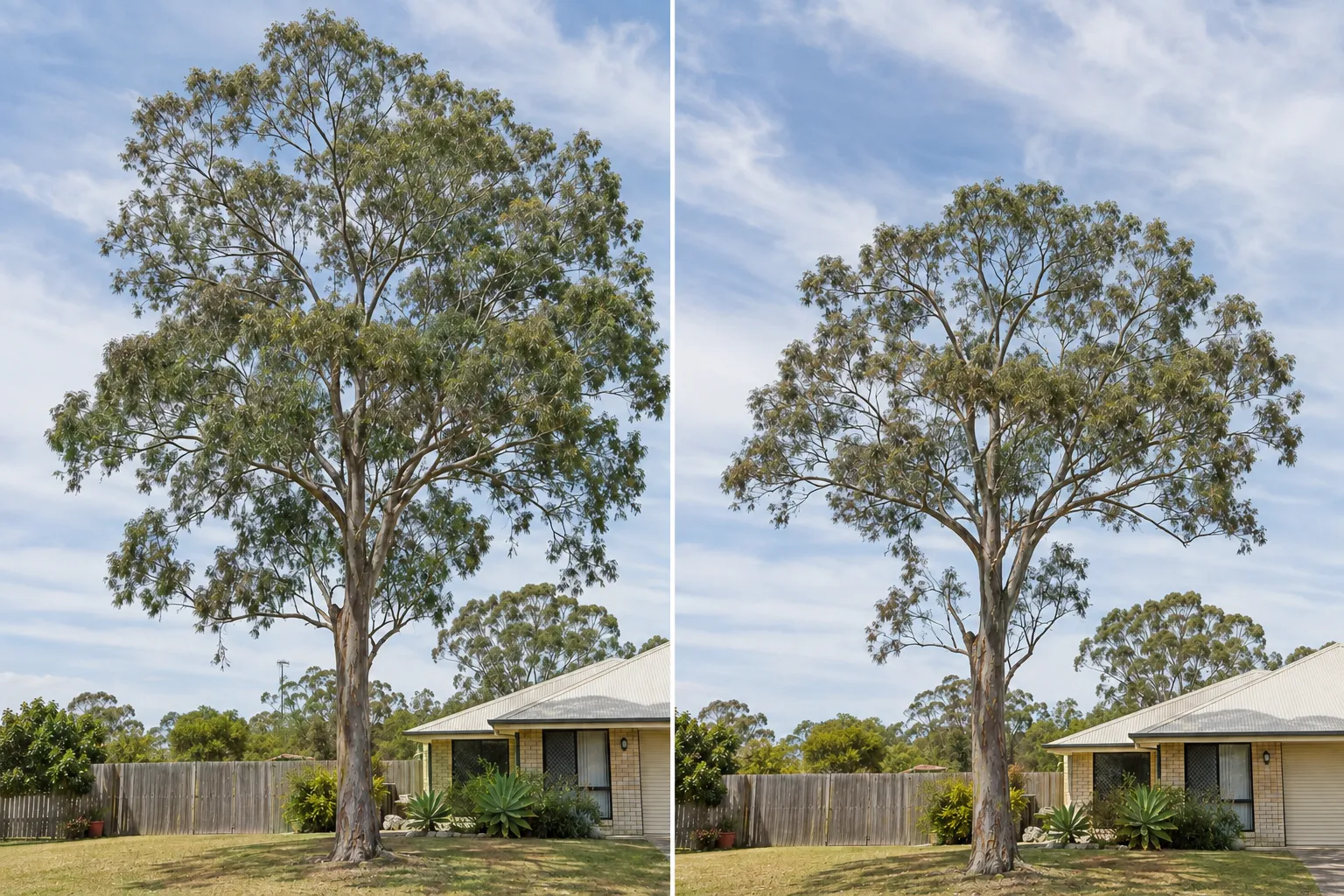
Before pruning begins, the tree is assessed for its species, age, health, structure and surrounding conditions. The arborist also considers nearby buildings, roofs, powerlines and other obstacles when deciding where and how much to prune.
During crown reduction, the focus is on:
Unlike topping or heavy lopping, crown reduction aims to make a tree smaller without unnecessarily damaging its natural structure or long-term health.
The International Society of Arboriculture explains that reduction pruning shortens leaders and branch terminals to suitably sized secondary branches, helping retain the tree’s form and structural integrity more effectively than topping.
Crown reduction is most appropriate when a healthy tree has become too large for its surroundings or its branches create a manageable safety, clearance or structural concern. The aim is to solve a specific problem while retaining as much healthy canopy and natural structure as possible.
It may be suitable when:
Crown reduction may not be appropriate for trees with severe decay, major structural defects or root problems. Depending on the circumstances, another pruning method, monitoring or removal may provide a safer solution.
Property owners can also review the signs that help determine when to prune or remove a tree before deciding on the most appropriate treatment.
Crown reduction may be recommended when a tree’s size or branch structure is creating a specific management problem. Common reasons include excessive spread over a roof or driveway, long branches placing additional leverage on their attachments, or branches approaching buildings and other infrastructure.
It can also help manage certain wind-related concerns by reducing the size and weight of selected parts of the canopy. Where a tree has become uneven or top-heavy, carefully planned reduction may help restore a more balanced structure.
The technique should not be used simply to make a tree substantially smaller. An arborist must first determine whether the tree can tolerate the work and whether reduction will actually address the underlying concern.
Crown reduction is best suited to healthy trees with a strong branch structure, adequate foliage and suitable lateral branches for making reduction cuts. The tree’s species, age, condition, growth habit and location also influence how well it may respond.
Trees with good vigour, sound branch unions and a stable framework are usually better candidates. A mature tree that has outgrown its space may be reduced to improve clearance while retaining the tree.
Some species tolerate moderate pruning better than others and can produce healthy regrowth. However, even pruning-tolerant species can be damaged by excessive cutting, while species that respond poorly to large wounds may require a more conservative approach.
Trees with decay, cavities, trunk cracks, root problems or widespread decline may require further assessment before pruning. Young trees may be better suited to formative pruning, while previously topped or heavily lopped trees can have weak regrowth that complicates further reduction.
The surrounding site also matters. Trees near buildings, roads, footpaths or powerlines may require targeted pruning, while trees in exposed locations need careful consideration of wind loading. Reducing only part of the crown can resolve the problem while preserving more of the tree.
Crown reduction, crown thinning and tree lopping are different approaches to managing a tree’s canopy. Crown reduction decreases height or spread, crown thinning reduces canopy density, while tree lopping involves indiscriminate or poorly positioned cuts that can damage the tree.
Understanding the broader difference between tree lopping and pruning can help property owners avoid techniques that may encourage weak regrowth or damage the tree’s structure.
Crown reduction shortens selected branches back to suitable lateral growth points to reduce the tree’s overall height or spread. It may be used to improve clearance or reduce the weight and leverage of overextended limbs.
Crown thinning removes selected smaller branches throughout the canopy to improve light and airflow without changing the tree’s overall dimensions. It is more appropriate when excessive canopy density is the main concern.
Tree lopping involves cutting branches back to arbitrary points or large stubs without considering the tree’s natural growth structure. This can create large wounds, encourage weakly attached regrowth and increase the risk of decay and future branch failure.
Proper crown reduction uses carefully positioned cuts and suitable growth points to maintain the tree’s natural shape and structural integrity. Where a tree has become too large, professional reduction is a more sustainable option than indiscriminate lopping.
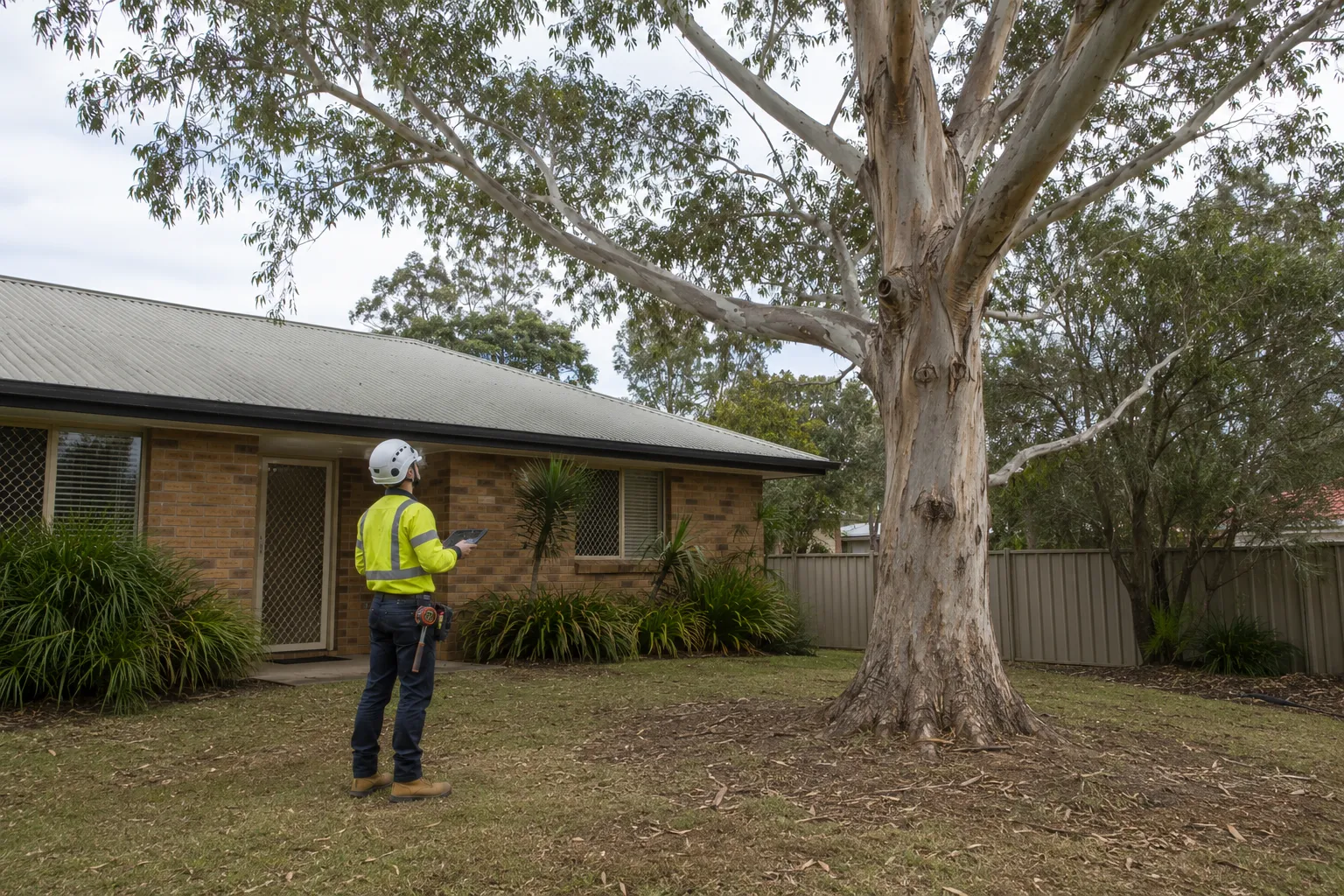
Arborists determine a safe level of crown reduction by considering the tree’s species, age, health, structure and growing environment. The amount removed should be enough to address the identified concern while retaining sufficient foliage and strong branch structure for continued growth.
Before pruning, the arborist checks for decay, cavities, cracks, deadwood and weak branch unions. The tree’s species and pruning tolerance are also considered. A tree already showing decline or structural weakness may require a lighter reduction or a different management approach.
The amount removed is based on the individual tree and the intended outcome rather than applying the same reduction to every tree. Branches are shortened to suitable lateral branches while avoiding large stubs and unnecessary wounds. The finished crown should remain natural and proportionate.
Nearby buildings, roads, powerlines and other structures can influence where reduction is appropriate. Exposed trees may require a more conservative approach because of wind loading. Arborists also consider future regrowth, with staged or periodic pruning often preferable to one severe reduction.
Yes, in some situations. Before a storm, reducing the length, weight and spread of selected branches can reduce wind loading and leverage on vulnerable limbs while retaining the tree’s natural structure.
However, crown reduction cannot make a tree completely storm-resistant. Trees with major cracks, extensive decay, root damage or unstable branch unions may require other remedial work or removal.
After a storm, the priority is to assess broken, split or hanging branches rather than automatically reducing the crown. An arborist can determine whether damaged limbs should be removed, shortened or otherwise managed. Trees close to buildings, roads, vehicles or powerlines should be assessed promptly and homeowners should avoid approaching dangerous hanging branches themselves.
Excessive or poorly performed crown reduction can weaken a tree rather than improve its safety. Removing too much foliage or making cuts in unsuitable locations can cause structural problems, decay, unhealthy regrowth and loss of the tree’s natural form.
Beware of these risks:
Crown reduction should therefore be proportionate to the tree’s condition and the problem being addressed. The objective is to manage a specific concern while retaining as much healthy foliage and natural structure as possible.
Proper aftercare helps a reduced tree recover, develop healthy regrowth and maintain a stable structure. Ongoing maintenance also helps prevent the crown from quickly becoming overextended again.
During the first year, the tree should be monitored for stress, dieback or excessive regrowth. Adequate soil moisture is important during hot or dry periods, while mulch can help retain moisture and protect the root zone. Mulch should be kept away from the trunk and fertiliser should only be used where a genuine nutrient deficiency has been identified.
New shoots should also be monitored as they develop. Weakly attached or poorly positioned growth may require selective pruning to encourage a stronger framework. Cracking, significant dieback, cavities or unusual fungal growth should be assessed by an arborist.
Crown reduction is not necessarily a one-off treatment. Periodic inspections and light pruning can help maintain the tree’s shape and prevent branches from becoming excessively long or heavy again. Trees close to buildings, roads or high-use areas may benefit from more frequent assessment.
Future pruning should remain proportionate to the tree’s condition and natural growth pattern. Avoiding repeated heavy reductions helps preserve healthy foliage, strong branch attachments and the tree’s natural form.
No, not always. Whether approval is required depends on the individual tree, its location and any vegetation protection, planning or development controls that apply to the property.
Property owners should check the requirements for their specific address before pruning is undertaken. A tree may be subject to local vegetation controls or other restrictions and separate requirements may apply where it is near a road reserve, powerline, development site or other infrastructure.
Property owners should review Logan City Council’s vegetation protection requirements to determine whether the tree is affected by local planning controls or protected vegetation mapping.
Professional assessment can help identify whether the proposed pruning is appropriate, but Logan City Council should be consulted where there is uncertainty about approval requirements. Checking before work begins can help property owners avoid unnecessary compliance issues or penalties.
Crown reduction can be an effective way to manage an oversized tree or address specific clearance and structural concerns without unnecessarily removing it. When properly planned, it can reduce the weight and leverage of selected branches, improve clearance and help manage certain storm-related risks while preserving the tree’s natural form.
Batchelor & Sons Tree Services can assess the tree and surrounding site to determine whether crown reduction is appropriate or whether another pruning solution would provide a safer result. Professional assessment and careful pruning help protect the tree’s structure, health and value while addressing the needs of the surrounding property.