

BUSINESS HOURS
Mon - Sun: 6am to 6pm
24/7 Emergency Work
Mon - Sun: 6am to 6pm
24/7 Emergency Work
SERVICE AREA
40km around Logan QLD
40km around Logan QLD
Gum trees are part of everyday life across Logan, yet many homeowners are unsure how to recognise when one is becoming dangerous. Batchelor & Sons Tree Services regularly attends properties where a tree appeared stable from the ground, only for a large limb to fail without obvious warning. Understanding the early signs of stress is essential when gum trees stand near homes, driveways or outdoor areas.
In this guide, we explain how to identify structural and environmental stress before failure occurs. Property owners will learn what to watch for in trunks, canopies and root zones, including subtle signs of decay, defects and site changes that often go unnoticed until a branch drops. We also outline the natural behaviour of local gum species and why even healthy-looking trees can shed heavy limbs during dry periods or after storms. By the end of this guide, homeowners and property managers will understand the key risk indicators professionals assess and when it is wise to seek expert advice.
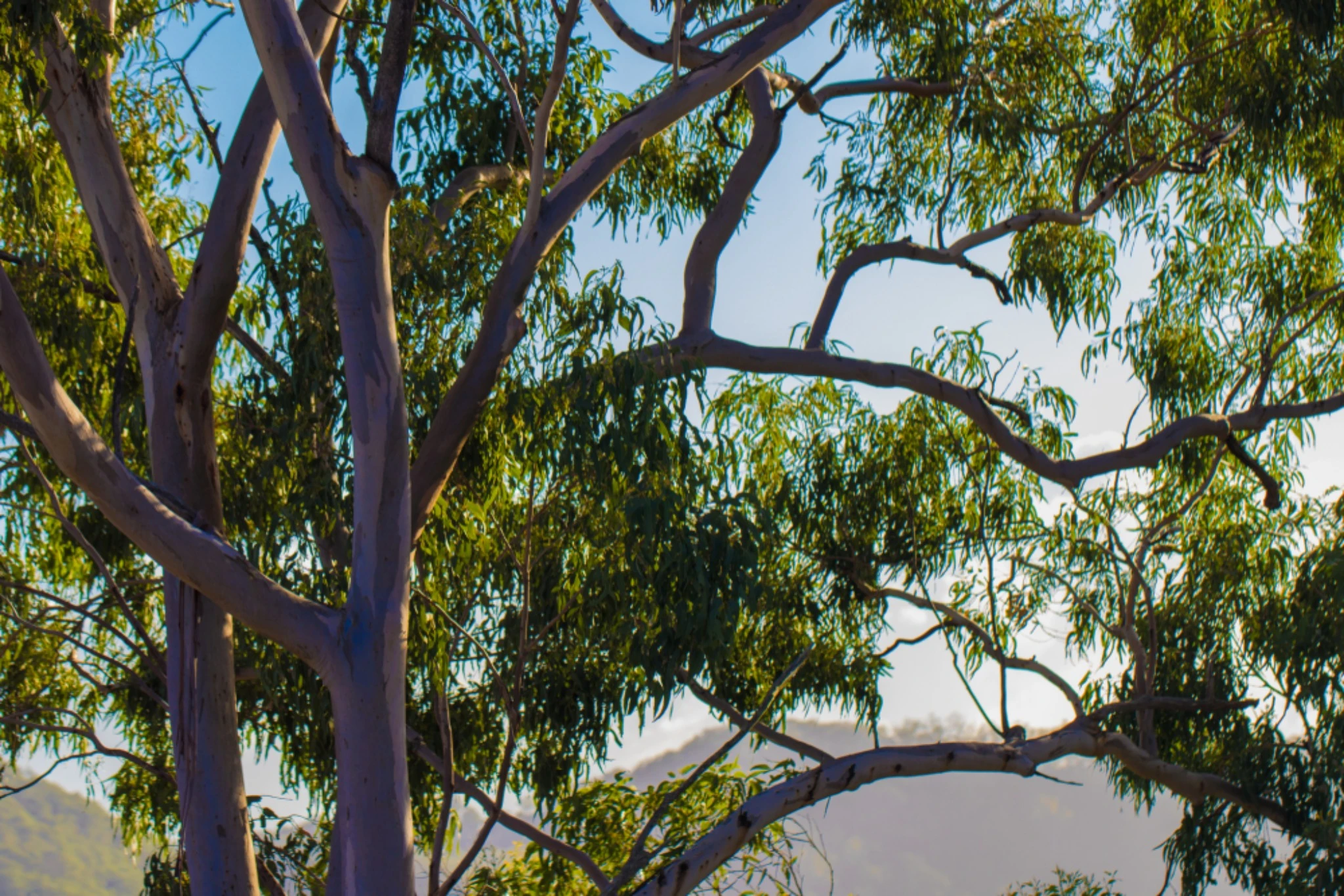
A stressed gum tree is significantly more likely to drop branches, particularly during storm season across the wider Brisbane southside. The key is recognising early changes in the canopy, trunk and root zone before structural weakness develops. Many warning signs are visible from the ground if you know what to look for and understand when professional assessment is warranted.
Arborists who regularly inspect local eucalypts see consistent patterns before major limb failures occur. Subtle canopy thinning, bark abnormalities or shifts in the way a tree is standing often appear well before an emergency develops.
Healthy gum trees in Logan typically carry a dense canopy suited to their species. One of the first indicators of stress appears in the foliage.
Warning signs include:
Isolated branch dieback may indicate a structural defect in that limb. Widespread thinning or crown dieback more commonly points to root disturbance, prolonged water stress or disease.
Excessive twig and leaf drop outside normal seasonal shedding can also signal stress. This often follows extended dry periods, soil compaction or recent construction work that has altered drainage or damaged roots.
The trunk and primary limbs often reveal structural stress before visible canopy decline occurs.
Long vertical cracks along a branch or main stem are serious warning signs, particularly after heavy rain or strong winds. Cankers, which appear as sunken or swollen areas where bark texture changes, can indicate disease weakening the underlying wood.
While peeling bark is normal for many gum species, sudden large sections lifting away, dark wet staining or excessive sap flow are not typical. Fungal growth such as mushrooms or bracket fungi at the trunk or branch unions suggests internal decay. When decay affects major attachment points, the risk of limb failure increases significantly.
Changes in posture are another critical indicator. A gum that has begun leaning more than previously, especially following storms, may have compromised roots.
Signs that require urgent attention include:
Within the canopy, structural defects may be less obvious but equally important. Large deadwood, twisted or heavily weighted limbs and tight V-shaped forks where branches press together are all higher-risk points. Included bark within these forks creates weak attachment that can split under wind load.
Old pruning wounds, torn branches or damage near powerlines can further weaken structure. Where multiple stress indicators are present, professional inspection is recommended to reduce the risk of unexpected failure.
Many homeowners are surprised when a seemingly healthy gum tree suddenly drops a large limb. The canopy may appear green and full, yet a heavy branch can fail without a storm or obvious warning. Understanding why this happens helps property owners decide when closer inspection is warranted.
Gum trees have natural shedding behaviour, but structural weakness can also develop internally long before external decline is visible. In built-up areas across Logan, environmental stress and urban conditions often accelerate these risks.
Eucalypts are naturally self-pruning. During dry periods or changes in soil moisture, they may shed outer or lower limbs to reduce the leaf load they need to sustain. This behaviour is sometimes referred to as limb drop or summer branch drop.
A gum can remain biologically healthy while discarding older or less efficient branches. From the ground, the tree may still show:
However, individual heavy limbs may already be under stress. When wind load increases or timber dries and contracts, those branches can fail even in relatively calm conditions.
A branch can carry a full canopy of leaves and still be structurally unsound. Weakness often develops inside the wood or at the attachment point between branch and trunk.
Internal decay may begin at old pruning wounds, storm damage or rubbing branches. The outer bark can remain intact for years while the internal wood deteriorates. External clues are often subtle and may include:
Included bark at branch junctions presents another significant risk. Instead of forming a strong U-shaped attachment, bark becomes trapped between the trunk and branch, creating a weak connection. From the ground this may appear normal, yet under wind load the fork can split suddenly.
Urban conditions can place additional stress on gum trees, even when they are suited to the local climate.
Compacted soil from vehicles or construction reduces root health and stability. Altered drainage from new driveways, paths or landscaping can change moisture levels in the root zone. The canopy may remain green, but the structural integrity of the tree can decline over time.
Periods of hot, dry westerly winds followed by heavy rain or irrigation can also increase limb weight and stress. Rapid drying and contraction of timber, combined with heavy foliage growth, increases the likelihood of branch failure.
In suburban settings where trees extend over roofs, sheds, driveways or play areas, these natural tendencies become a safety concern. This is why experienced arborists recommend periodic professional inspections, even when a gum tree appears healthy from the ground.
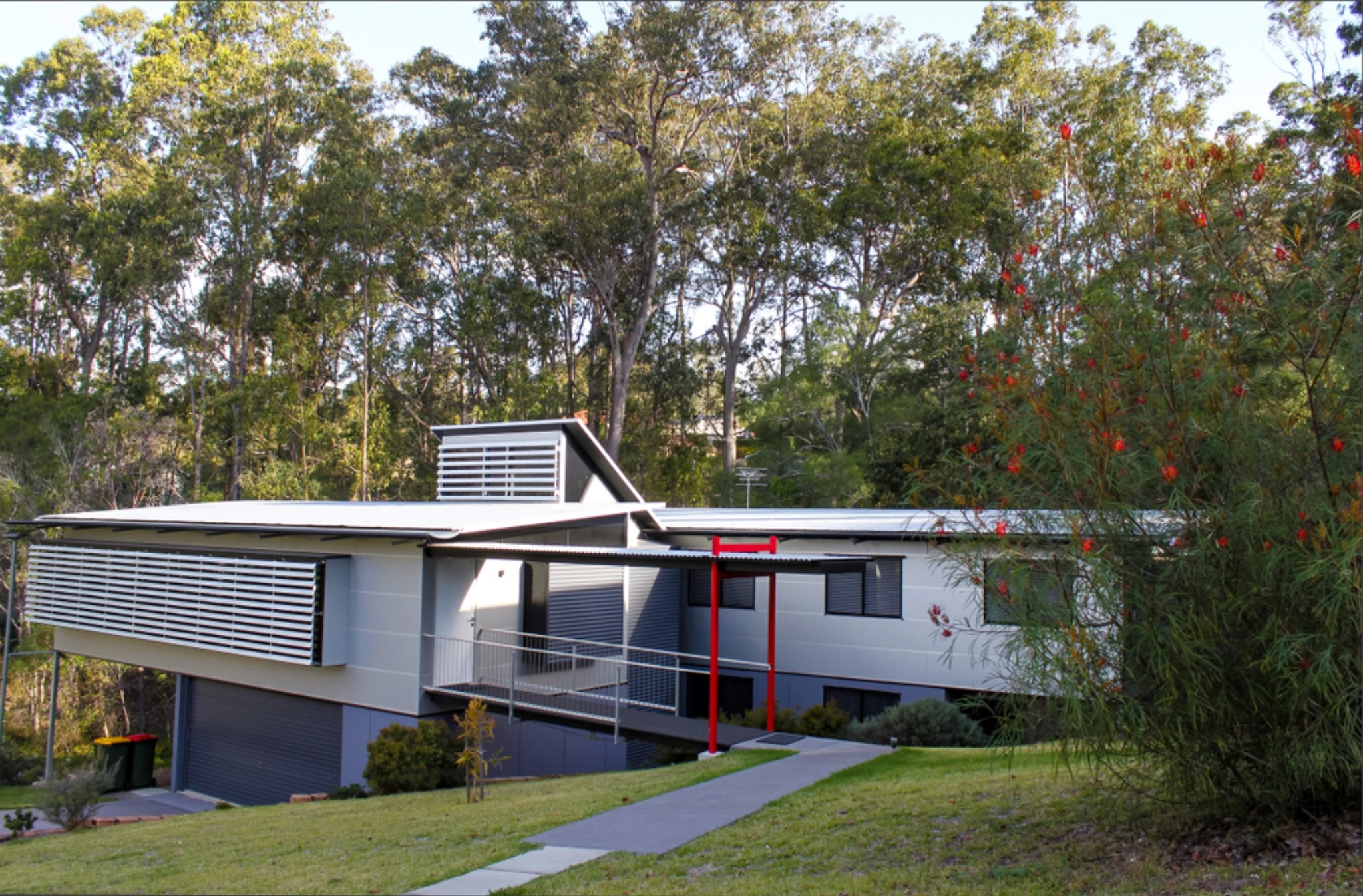
A gum tree becomes a genuine risk when structural defects combine with proximity to people or property. A minor defect in an open paddock may be manageable. The same defect over a roof, driveway or play area is not.
Risk is not determined by species alone. It is assessed by looking at the tree’s condition, its size and what would be impacted if a branch or the entire tree were to fail. In built-up areas across Logan, the margin for error is small, particularly during storm season or prolonged wet periods.
Risk increases significantly when a gum extends over areas that are regularly occupied or contain valuable assets.
A tree may be considered higher risk when:
Many mature gums were retained as homes were built around them. As these trees grow, their canopy spread and root systems can exceed the space originally available. What was once a suitable planting distance can gradually become a higher-risk position that requires closer monitoring or structural pruning.
Condition often determines risk more than species. A gum located near a home becomes hazardous when structural weakness is already present.
Indicators that elevate risk include:
While sudden limb drop is a known behaviour in some gum species, repeated failure near buildings or frequently used areas should not be ignored. When these symptoms appear alongside proximity to structures, a professional risk assessment is warranted.
Even a structurally sound tree can become hazardous if surrounding site conditions compromise its stability.
In Logan’s clay soils, heavy rainfall followed by wind can loosen root plates, especially where roots have been cut or soil levels altered. Excavation for plumbing, retaining walls or driveways can silently weaken anchorage over time.
Risk increases when:
When site stress combines with structural defects, the likelihood of failure rises sharply. In these cases, targeted weight reduction pruning or, in some circumstances, removal may be recommended to manage the hazard before damage occurs.
Assessing whether a gum tree is becoming dangerous requires looking beyond surface appearance. Structural weakness, environmental stress and site conditions often show subtle warning signs long before a major limb fails. Deadwood, bark defects, root movement and repeated branch drop are not random events. They are indicators that the tree may be under strain.
Healthy foliage does not automatically mean a tree is structurally sound. In urban areas across Logan, where gums extend over homes, driveways and outdoor living spaces, even minor defects can become significant safety concerns. The combination of structural weakness and proximity to people or property is what turns a manageable issue into a genuine hazard.
Early assessment allows for practical solutions. In many cases, targeted pruning or weight reduction can manage risk without removing the tree. In situations where large structural limbs are compromised, professional tree lopping in Logan may be required to safely remove hazardous sections and reduce the likelihood of unexpected failure. Where defects are severe or site conditions are compromised, more decisive action may be necessary.
The key message is simple: do not wait for a branch to fall before investigating warning signs. Regular visual checks and professional advice when multiple stress indicators are present is the most reliable way to manage gum trees safely while preserving their long-term value.